Client
Self-initiated (Speakeazy.pro)
I narrate audiobooks and hated the hours of character prep before every recording. So I went looking for a tool to do it, found that none existed, and built one myself: through three abandoned prototypes and a two-week ground-up rewrite, launched to real users in January 2026.
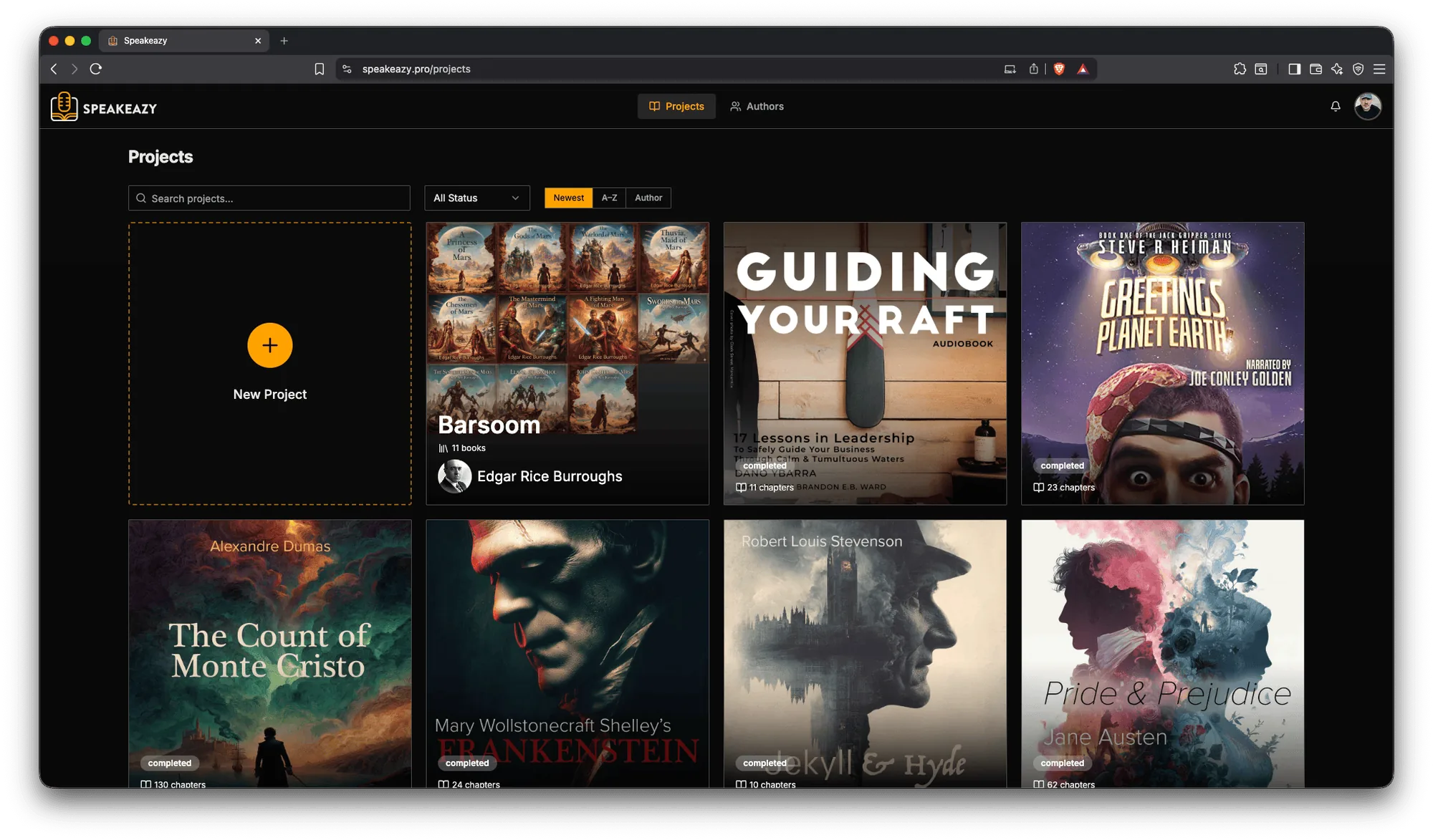
I record and audition for audiobooks. Every project begins the same way, long before the microphone, with prereading: working through the whole manuscript, sometimes more than once, to learn every character, how they relate, and how each one changes across the book. I need all of it to make voice decisions as an actor.
That work is heavier for narrators than for any other kind of performer. In film or television you play one character and go deep on that one. An audiobook narrator plays everyone: every character, every background, every relationship, and has to hold them consistent for hundreds of pages.
The brief was as open-ended as it gets: I was the client, the user, and the engineer. I wanted the prep done for me so I could get to the part I actually do this for: the performance.
Audiobook narrators are paid by the finished hour, not the hours worked. Prereading is critical, especially in fiction, and it is entirely unbilled. Every hour spent mapping characters is an hour of margin gone before a single line is recorded.
It's also unforgiving. Get a character wrong early and the cost compounds the deeper you go.
You can't learn on page 200 that the character you've voiced en français for 199 pages is from Paris, Texas.
I went looking for something to carry the load. It was 2025: surely a tool existed. It didn't. Not one product did what I needed, and nothing came close.
So: the most important prep in audiobook narration is also the most tedious and the least paid, and in 2025 nothing existed to do it.
The instinctive move was to build the app first. I didn't, because I had no proof AI could actually attribute dialogue and track characters across a full book. So I tested the idea before committing to it.
I built a proof of concept in ChatGPT and confirmed the core was possible. I made two or three more versions on Hugging Face using Llama models, then a full app in React on an early AI-assisted build stack. It ran until I tried to deploy. Vercel fought me at every turn.
A developer friend reviewed it and was blunt: the thing was badly over-architected, and the deployment pain was a symptom of that complexity. His counsel was to stop patching and rewrite from scratch on a tighter stack in Next.js.
The story here isn't a screen. It's the build: three prototypes and a rewrite, each one teaching me what the next one had to be.
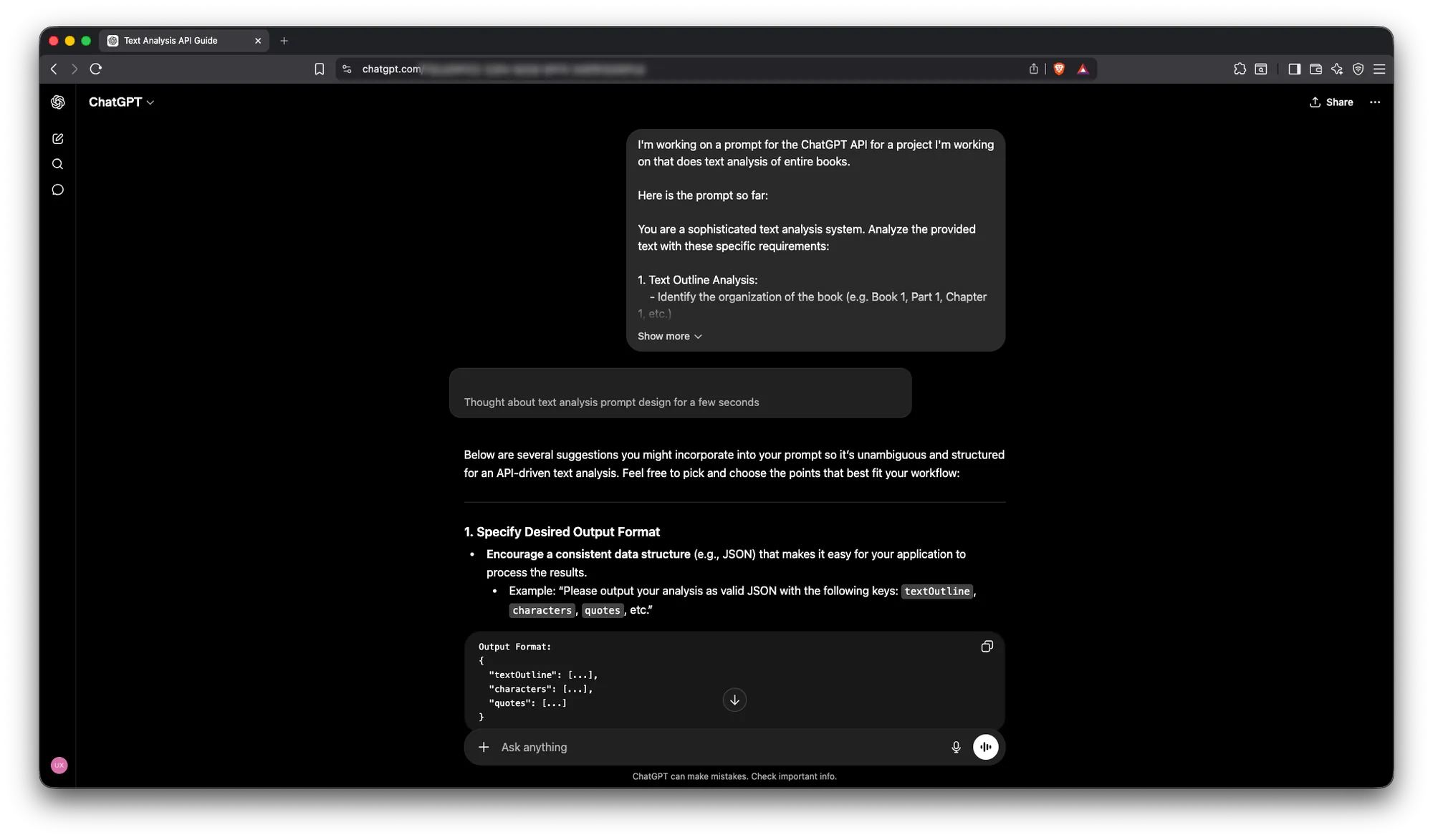
The cheapest way to test the scariest assumption. It proved AI could pick out characters and attribute dialogue well enough to build on, before I wrote any real code.
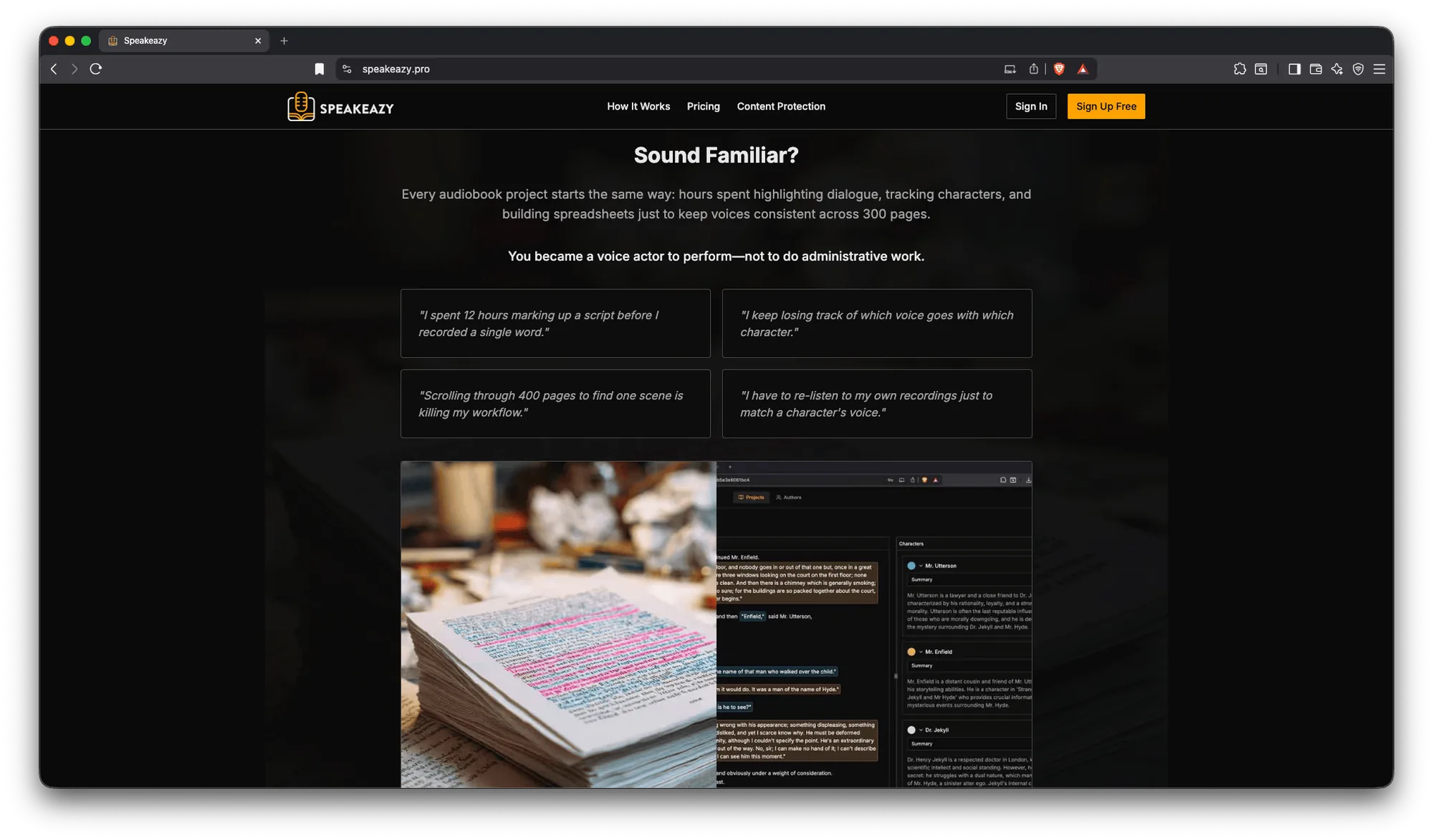
A working-on-my-machine app that couldn't be deployed. It cost months and never launched. But it defined exactly what "too clever" looked like, which made the rewrite fast.
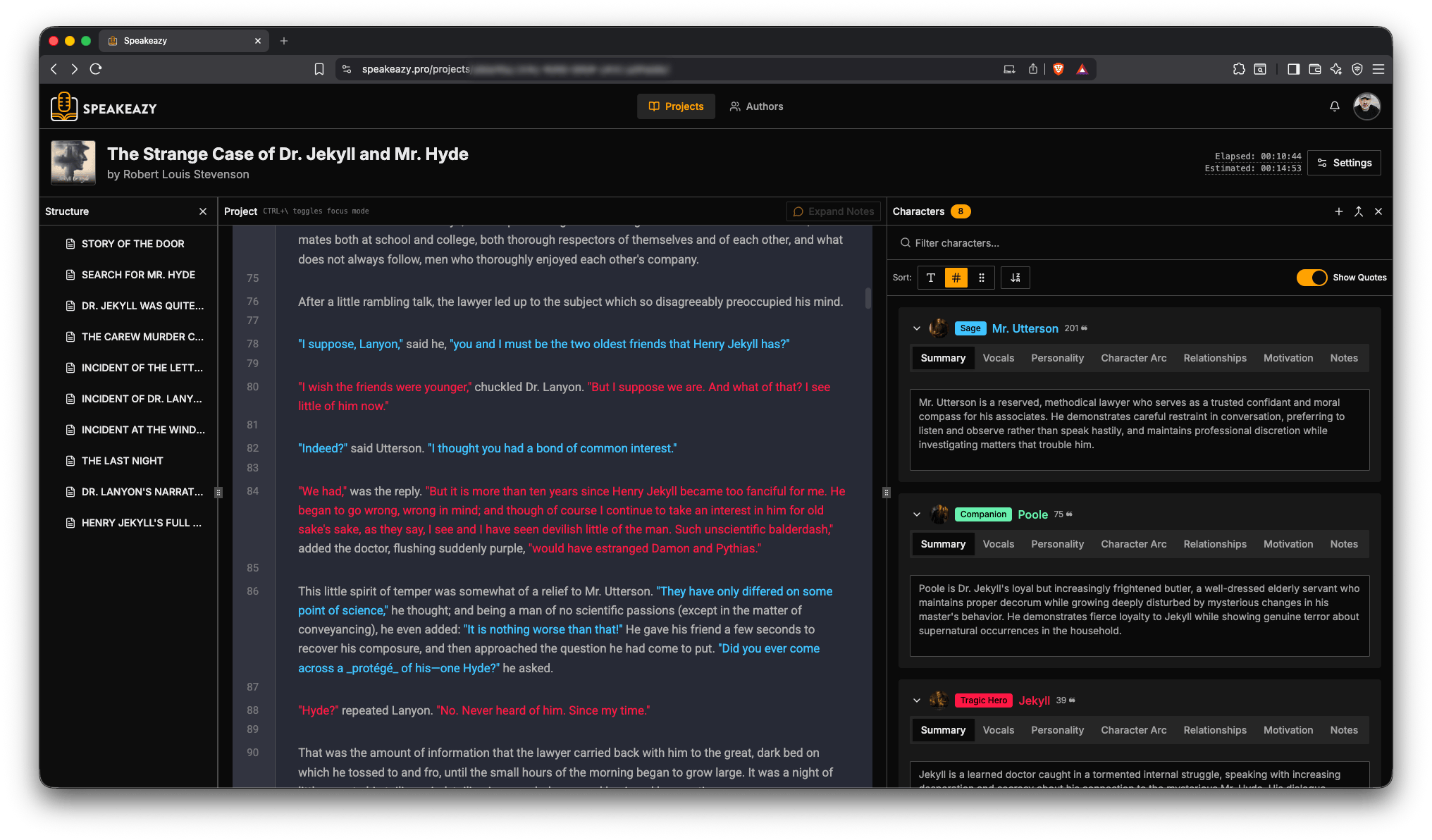
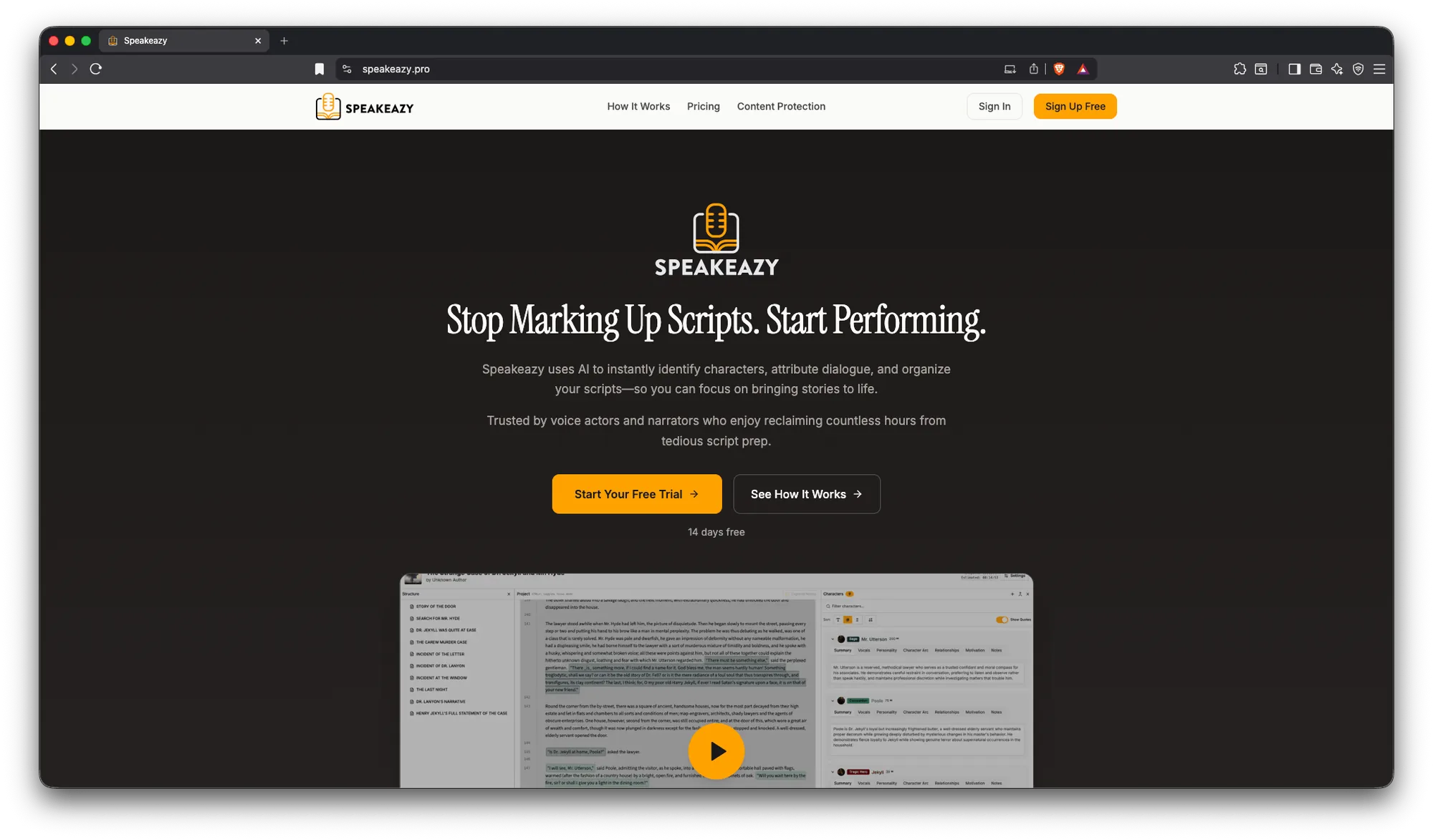
Rebuilt from zero over a two-week holiday on a tighter stack. It deployed, worked for real users, and went live in January 2026.
Since launch I've been adding what narrators actually ask for: character arcs that track across an entire series, and persistent color codes so the villain and the hero keep their colors across every project. On performance: a short story analyzes in minutes, a novel like The Great Gatsby in about 20–25, and even the longest books finish in a few hours, set-and-forget.
What I'd do differently: the over-architecture. I let an early build get far more complex than the problem deserved, and it cost me months and a deployment I could never make work. The tell was there early. I just didn't have the discipline yet to keep it simple.
What surprised me: that the gap was total. I assumed that in 2025 someone had built this; the real surprise was that no one had, and that the first person to find my version was sent there by an AI.
What I took with me: point AI at the tedious part so the human gets to do the fun part. That's the whole idea behind Speakeazy, and it's how I think about every tool I build now.