Client
Precocity
I joined Precocity in 2016 as its first UX hire. The firm had never had the discipline. Over the next ten years I built the practice, put it at the front of every engagement, and went from Director of UX to Chief Experience Officer and part-owner.
What drew me to Precocity in 2016 was the range. This was a digital consultancy that built on Microsoft Surface and large-format touch walls and tables before they were mainstream, shipped 3D in game engines like Unity, stood up B2B SaaS, built websites, and carried a marquee client in Deloitte. Technically and creatively, it was strong.
What it didn't have was a user-experience practice. There were five talented UI, graphic, and brand designers, but no researcher, no UX methodology, and no one whose job was to start with the user and the problem rather than a handed-down list of requirements.
I came in as the sixth person on the design team, and the first the firm had ever hired to do research and UX. The mandate was as open as it gets: build the discipline, whatever that turns out to mean. There was nothing to inherit and no playbook, so I spent the first few months designing the practice before I designed anything else.
The way work flowed, design was the last stop. Business analysts and developers gathered requirements, handed the design team a list, and asked for a UI. The designers made the screens look right, but no one had asked whether they solved the right problem, and no one had tested them with a real user.
For a consultancy, that's a business problem as much as a craft one. Clients were buying output instead of outcomes, and the firm carried the risk when a handsome, unvalidated screen didn't land in front of real people.
Precocity could build almost anything. What it couldn't yet do was prove it was building the right thing.
So the opportunity was obvious: get UX into the pitch and into delivery, so design led the engagement instead of showing up at the end to make it pretty.
The first move was practical. Within the first weeks I moved the team off Balsamiq, Photoshop, and Illustrator onto Sketch, paired with the InVision they already used, because the old toolchain couldn't keep up with how product design actually worked by then.
Then the practice itself. I wrote the methodology Precocity had never had: research first, problem first, data-driven. Start with the user, unravel the problem, build the information architecture, wireframe, rapidly prototype, test the wireframe before investing in high fidelity, test the high fidelity, then ship. Service design was still new to the U.S. when I brought it into the firm's toolkit, a fresh way to serve a varied book of clients.
To get UX into the room, I built a deck on the ROI of UX and carried it into pitch after pitch from 2016 until about 2022. By then the results had made the argument for me, and clients simply asked what the problem was, what it would cost, and how fast we could deliver. When the work demanded a research engine the firm didn't have, I built one: hiring and training contractors into researchers, run in two shifts so a deep testing week never meant twelve-hour days for any one person.
At a consultancy, no single artifact is "the work." The method is, and it paid off engagement after engagement: a global automaker, Porte, a major insurance broker, and a hundred more. Here are the three pieces of it I'd show you first.
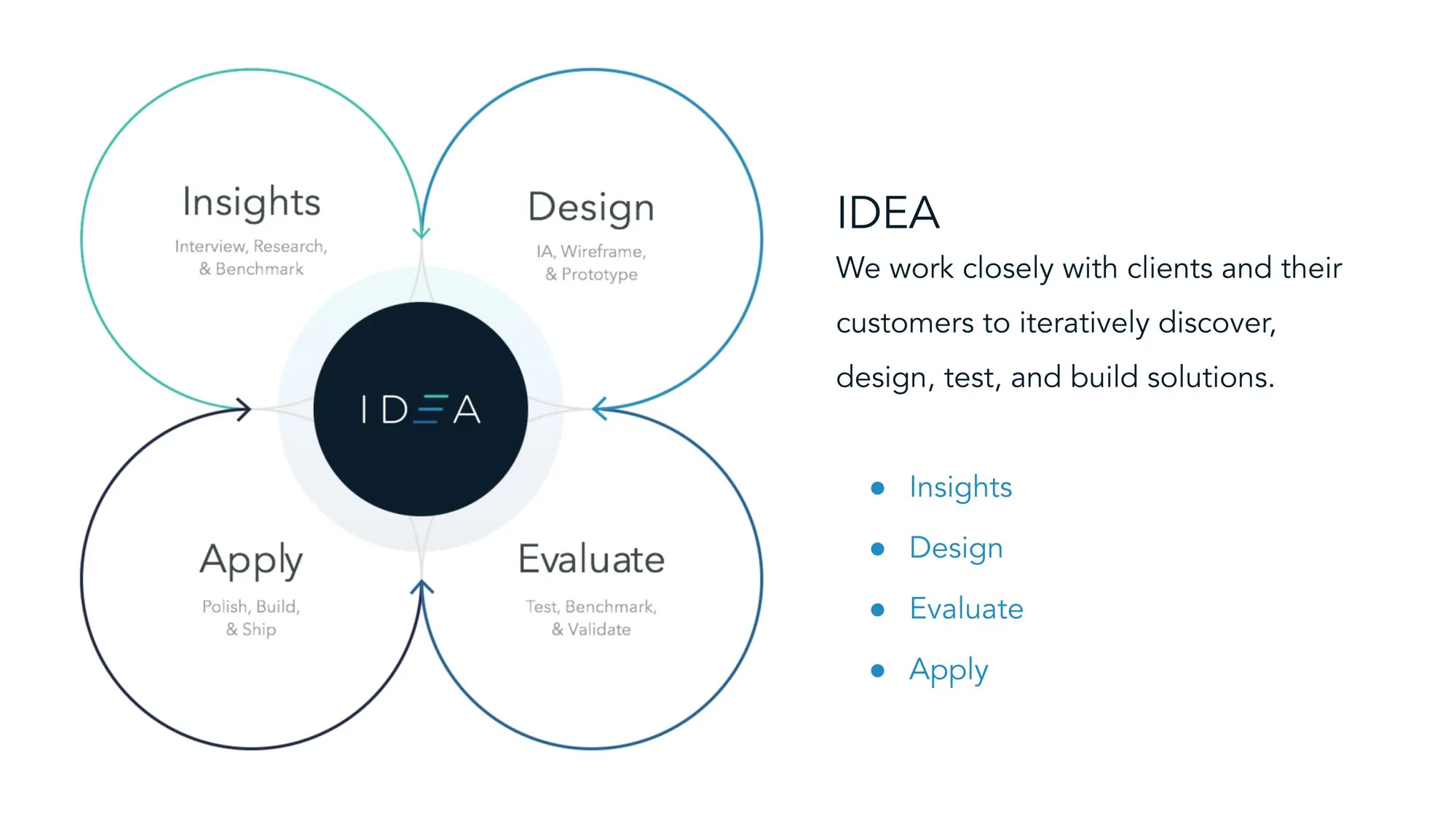
The deck I carried into pitch after pitch from 2016 to ~2022, arguing why every engagement should lead with UX. It worked until it was obsolete: by the end, clients didn't need convincing.
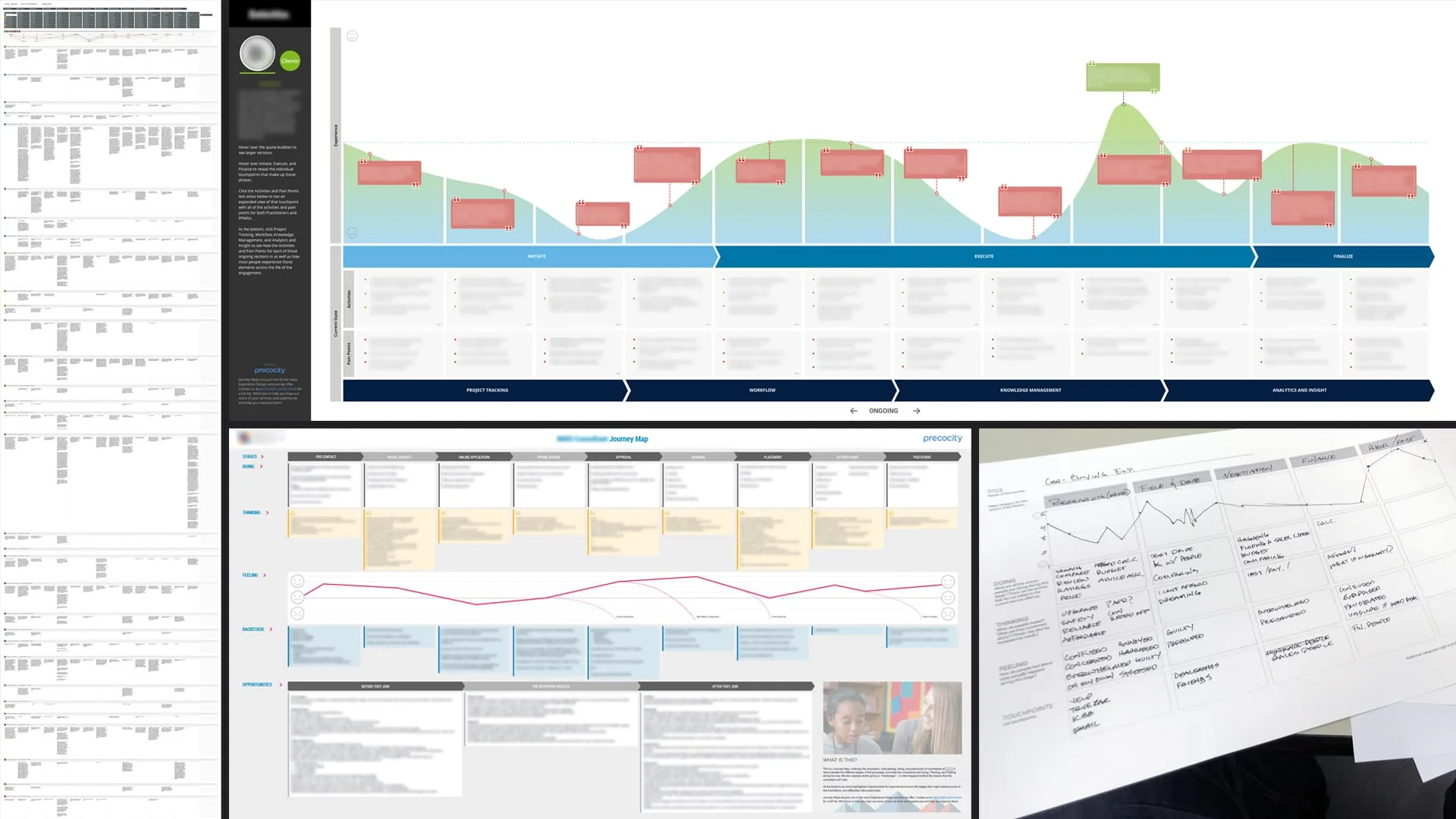
The first thing we made on every project: proof we understood the problem and the people who had it, before anyone drew a screen.
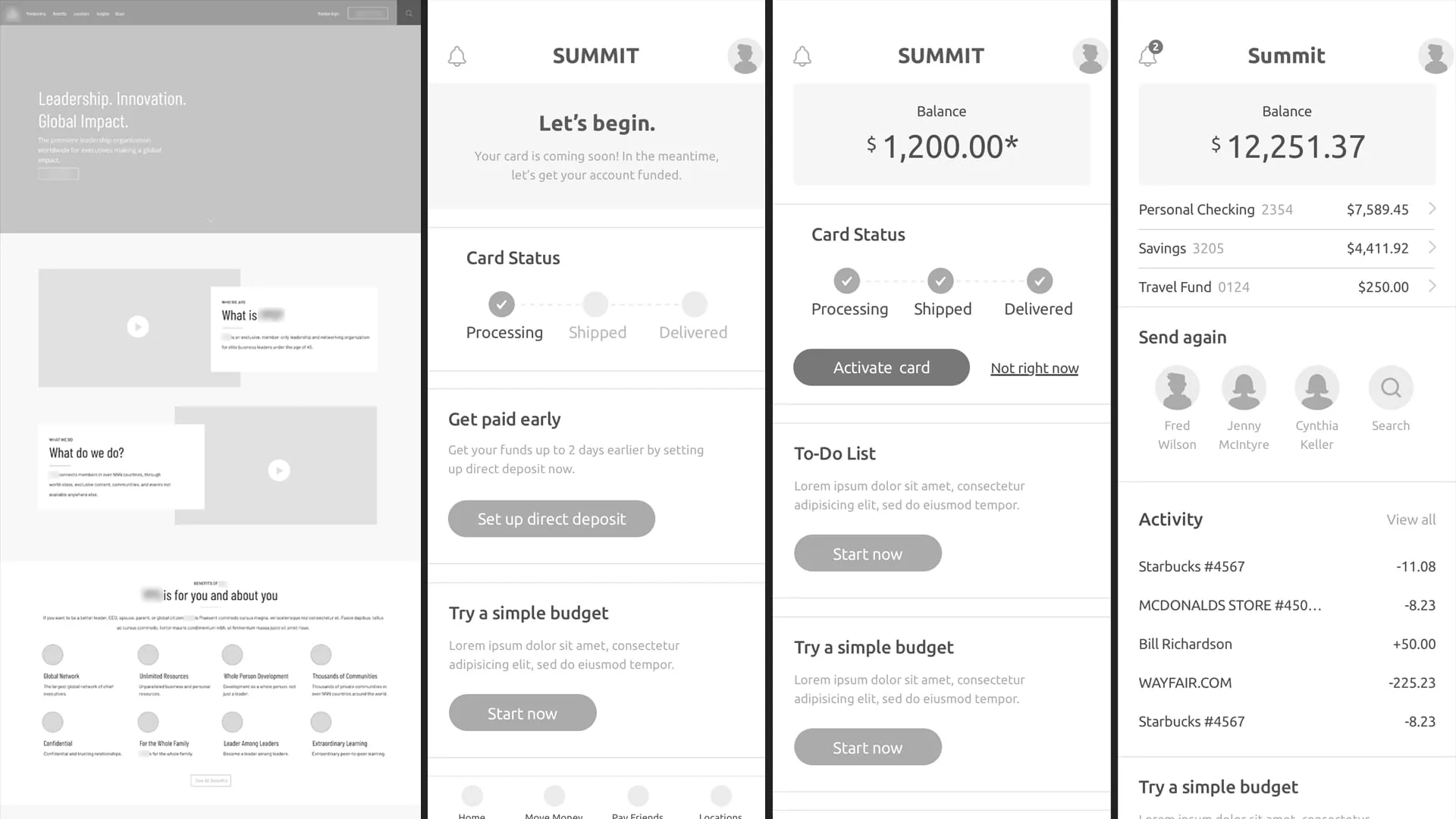
The pipeline: test the wireframes before going high fidelity, test the high fidelity before building. Same every time, and the reason clients stopped paying us to build the wrong thing.
The decade taught me the business as much as the craft. The move from Director of UX to Chief Experience Officer came with equity and an education in how a consultancy actually makes money, patiently taught by our chief creative officer, Tim Doll, and our COO, Tim Starling. For the first five years I was here we had no salespeople; the book grew on delivered work and relationships. And through 2020 – 2025, while peers were retrenching, we grew every single year.
The hardest lessons were about people. I learned to hire slow and fire fast the expensive way, by doing the opposite and watching everyone pay for it, the ones I held onto too long most of all. I also learned to extend grace, to admit when I'm wrong, and to take a hard critique as a gift. What I'm proudest of, though, is a design team no one ever had to lay off, where people used Precocity as a launchpad to senior research and design roles at the biggest names in the region: Southwest, Cigna, and more.
I've had the same bias since I started out as a developer:build the version that survives a bad quarter, even if it isn't the one you'd post on Dribbble. Being a coder first, I've always worked the seam between design and engineering: defending the user when the build is hard, and killing the over-wrought design when it isn't worth the cost. In the AI age I've started building again myself, sometimes live on a client call, turning what they're describing into something on screen before the meeting ends. The Speakeazy build is that same instinct with new tools. The medium keeps changing; the discipline doesn't.